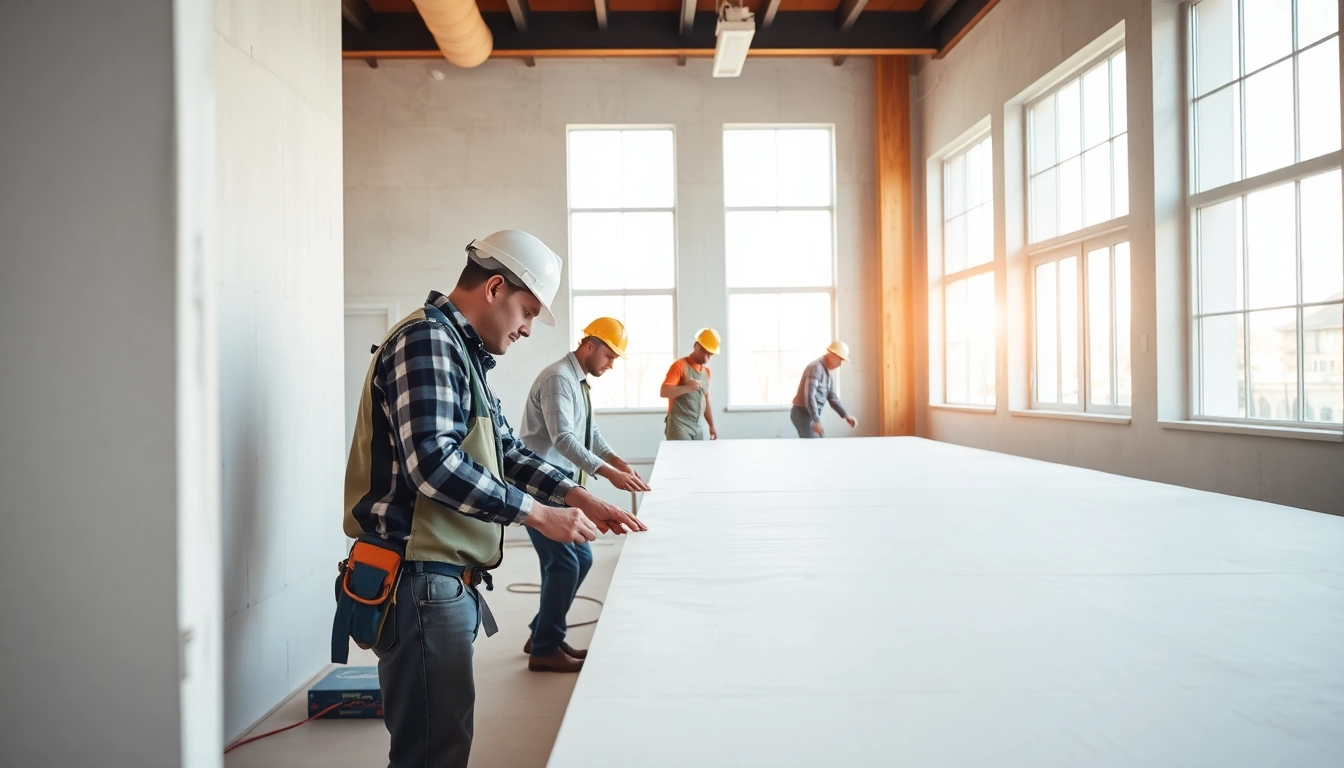
Understanding Drywall Basics
What is Drywall?
Drywall, also known as gypsum board or plasterboard, is a panel made of gypsum plaster pressed between two thick sheets of paper. It is a staple in modern construction due to its convenience and effectiveness in creating smooth, fire-resistant walls and ceilings. Drywall installation has become a common practice because it allows for faster building processes compared to traditional plastering methods. Its composition makes it both lightweight and versatile, catering to various applications, including residential and commercial projects.
Benefits of Using Drywall
The adoption of drywall brings numerous advantages, enhancing both the construction process and the quality of finished interiors. Key benefits include:
- Speed of Installation: Unlike traditional plaster, which requires multiple steps and drying time, drywall can be installed quickly, leading to faster project completion.
- Cost-Effective: Drywall is generally less expensive than plaster, making it an attractive option for budget-conscious projects without sacrificing quality.
- Fire Resistance: Many types of drywall are formulated to offer fire resistance, playing a crucial role in passive fire protection within buildings.
- Soundproofing: The layers within drywall can provide effective sound attenuation, making it ideal for multifamily housing, offices, and other spaces where noise reduction is essential.
- Versatility: Available in various thicknesses and sizes, drywall caters to a wide range of design needs—from standard walls to curved features and ceilings.
Common Types of Drywall
Understanding the different types of drywall is essential for choosing the right material for your project. Common types include:
- Standard Drywall: This is the most commonly used type for interior walls and ceilings, available in thicknesses of 1/4”, 1/2”, and 5/8”.
- Moisture-Resistant Drywall: Often referred to as green board, this type is designed for areas prone to humidity, such as bathrooms and kitchens.
- Fire-Resistant Drywall: Containing additional additives to meet fire resistance standards, this drywall is ideal for garages or areas where fire safety is a concern.
- Soundproof Drywall: With added acoustic properties, this type minimizes sound transfer, making it perfect for home theaters or music rooms.
- Specialty Drywall: This category includes various products designed for specific applications, including flexible drywall for curved walls and impact-resistant panels for high-traffic areas.
Preparation for Drywall Installation
Gathering Essential Tools
Before beginning the drywall installation process, it's crucial to assemble a comprehensive toolkit to ensure efficiency. Essential tools include:
- Drywall Sheets: The primary material for your installation.
- Utility Knife: For cutting drywall sheets to size accurately.
- T-Square: To ensure straight edges when cutting drywall.
- Drywall Screws: Used to secure drywall to framing.
- Drill/Driver: For driving screws into studs and framing.
- Tape Measure: Essential for accurate measurements of walls and ceiling heights.
- Joint Knife: Used for applying joint compound for a smooth finish.
- Sanding Sponge or Pole Sander: For smoothing out joints and seams.
- Safety Gear: Include goggles, masks, and gloves for protection during installation.
Preparing the Workspace
A well-prepared workspace can prevent accidents and streamline the installation process. Here are some steps to get ready:
- Clear the Area: Remove furniture, decorations, and any items that might obstruct your work.
- Check the Framing: Ensure that the studs and sealing boards are adequately aligned and in good condition, ready to receive drywall.
- Provide Adequate Lighting: Good lighting helps prevent mistakes and enhances safety.
- Set Up a Cutting Station: Designate an area for cutting drywall that allows for easy movement and cleanup of any debris.
Measuring and Cutting Techniques
Precision in measuring and cutting drywall is vital for a successful installation. Follow these techniques:
1. Measure the Space: Use a tape measure to accurately gauge the size of each wall or ceiling area to determine the necessary drywall sizes.
2. Mark the Drywall: Lay the drywall sheet flat and mark the cutting line with a pencil. Use a T-square to ensure a straight line.
3. Score and Snap: Use a utility knife to score the drywall firmly along the marked line. Then, snap the board by applying downward pressure on one side.
4. Cut the Backing Paper: Once snapped, flip it over and cut through the backing paper to separate the pieces.
Drywall Installation Process
Securing Drywall to Framing
Securing drywall correctly is crucial for durability and stability. Here's how to do it:
1. Position the Drywall: Start at one corner of the room. Hold the drywall sheet vertically against the framing with the top edge snug against the ceiling.
2. Use a Drywall Lift: If working alone, consider using a drywall lift or a prop to hold the sheet in place.
3. Fasten the Drywall: Using an electric drill/driver, place drywall screws every 16 inches along the framing, ensuring the screws slightly dimple the surface without breaking the paper.
Applying Joint Compound
After securing the drywall, it's time to finish the seams with joint compound. Follow these steps:
1. Mix the Compound: If using powdered joint compound, mix it according to the instructions until it reaches a smooth consistency.
2. Apply the Compound: Use a joint knife to apply compound over the joints and screw heads evenly. Feather the edges to ensure a smooth transition.
3. Sand Between Coats: Allow the compound to dry before sanding lightly to achieve a smooth surface. Apply additional coats as necessary for a seamless finish.
Finishing Techniques for Smooth Surfaces
To achieve a flawless finish, follow these finishing techniques:
1. Final Sanding: Once the last coat of joint compound is thoroughly dry, sand down any raised areas with a sanding sponge for an even surface.
2. Primer Application: Before painting, apply a primer to the drywall to seal the surface and improve paint adhesion.
3. Paint the Surface: Once the primer is dry, apply your desired paint finish. Consider using a roller or a brush for edges and intricate areas.
Common Drywall Challenges and Solutions
Dealing with Moisture Issues
Moisture can be a significant challenge for drywall, leading to issues like mold and sagging. Here’s how to manage it:
1. Identify the Source: Check for leaks, humidity levels, or condensation in the area before installing drywall.
2. Select Moisture-Resistant Products: Using moisture-resistant drywall in areas like bathrooms can help combat moisture damage.
3. Venting and Dehumidifiers: Install proper ventilation systems and utilize dehumidifiers to maintain optimal air quality.
Fixing Cracks and Holes
Cracks and holes in drywall can detract from the appearance and structural integrity. Here are techniques for repair:
1. Small Cracks: For hairline cracks, use joint compound—apply it with a putty knife and feather it out when finishing.
2. Large Holes: For larger holes, use a patch kit or cut a new piece of drywall to fit, securing it with screws and applying joint compound over the seams.
3. Reinforcement: Incorporate mesh tape along seams to strengthen the bond and prevent re-cracking.
Identifying Quality Problems
Being aware of potential quality issues can save time and resources. Common signs include:
1. Uneven Surfaces: Check for bumps or uneven spots that may result from improper pressure or insufficient compound application.
2. Joint Cracking: Pay attention to the seams over time; if they crack, it might indicate improper installation or movement in the framing.
3. Excessive Dust: Excessive dust after sanding may indicate a poor compound application that needs addressing.
Maintaining Finished Drywall
Best Practices for Upkeep
Maintaining drywall is essential for longevity and appearance. Adhere to these practices:
- Regular Cleaning: Dust and clean walls periodically to prevent buildup.
- Inspections: Routinely inspect for signs of cracks, moisture, or damage, addressing issues immediately.
- Touch-Up Paint: Keep touch-up paint handy to address minor scuffs and scratches promptly.
Painters' Tips for Drywall Surfaces
For optimal painting results on drywall, consider the following tips:
1. Use a Quality Primer: Ensure the drywall is sealed before painting to prevent uneven paint absorption.
2. Choose the Right Paint: Select paint designed for walls, typically with a satin or eggshell finish.
3. Apply Multiple Coats: Depending on the color and type of paint, multiple coats might be necessary for an even finish.
Innovative Techniques for Damage Prevention
Implementing preventive techniques can extend the life of your drywall:
1. Corner Guards: Installing corner guards can protect vulnerable areas in high-traffic environments.
2. Moisture Barriers: Use moisture barriers behind drywall in humid areas to prevent water absorption.
3. Regular Maintenance Routines: Establish regular checks for wear and tear, particularly in areas exposed to heavy use.
Frequently Asked Questions
1. What is the average lifespan of drywall?
Drywall can last several decades if maintained properly; however, environmental factors may reduce its lifespan.
2. Can I install drywall over existing walls?
Yes, installing drywall over existing walls is possible, but ensure the surface is sound and level to maintain structural integrity.
3. How do I know if I need moisture-resistant drywall?
Consider moisture-resistant drywall in rooms with high humidity, like bathrooms or kitchens, to prevent water damage.
4. What tools are essential for drywall installation?
Essential tools include a utility knife, drywall screws, T-square, and joint knife for proper installation and finishing.
5. Is it possible to repair damaged drywall myself?
Yes, many drywall repairs can be done by homeowners using patch kits, joint compound, and basic tools for minor damages.